
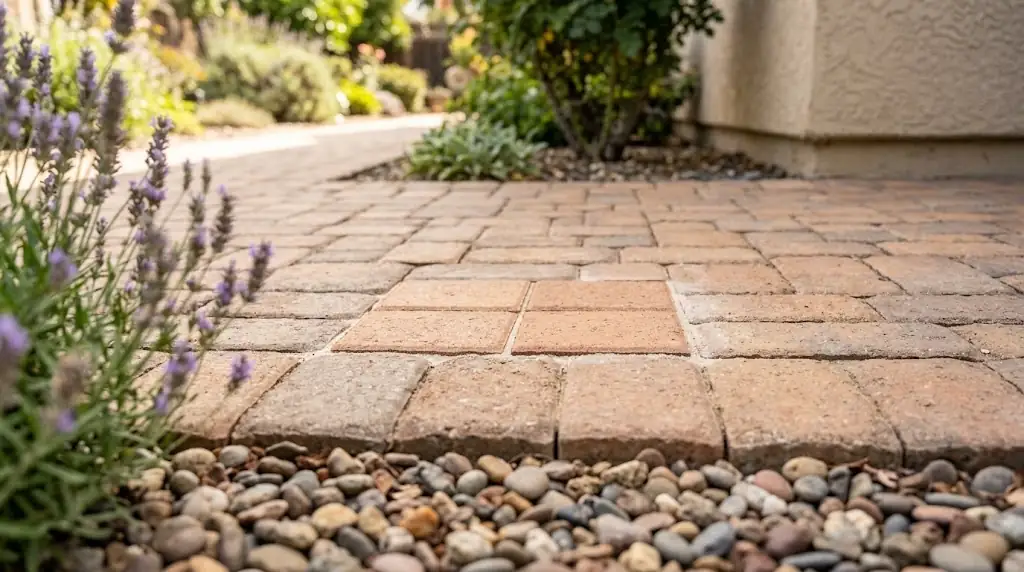
Interlocking paving stones are engineered to be one of the strongest, most durable surfaces you can install on your property. When built correctly, a paver patio or driveway should last for decades without shifting or settling. However, we have to look critically at the reality of the hardscaping industry: not all contractors build things the right way.
If you have a section of pavers that is sinking, heaving, or spreading apart, it is rarely a problem with the stones themselves. The failure almost always lies underneath the surface, hidden in the foundation.
At Modesto Pavers, we don’t just build new hardscapes; we diagnose and repair failing systems. If your outdoor space in Modesto, CA is starting to look like a tripping hazard, we can step in, find the root cause of the failure, and restore your surface to its original condition.
Identifying the Root Cause of the Problem
When a homeowner sees a sunken spot in their driveway or a raised bump on their patio, the instinct is to treat the symptom. Many people try to pry up the affected stones, dump some extra sand underneath them, and pound them back into place.
If you take a critical approach to hardscape mechanics, you quickly realize why this DIY fix fails within a few months. Pavers don’t move on their own. They are pushed or pulled by external forces. If you don’t correctly identify and eliminate the underlying force that caused the movement in the first place, the problem will inevitably return.
Before we remove a single stone, we evaluate the site to figure out exactly why the failure occurred. In our Central Valley climate, we typically trace paver failures back to three distinct culprits.
Common Paver Failures in Modesto, CA
1. Aggressive Tree Roots During our long, dry summers, trees become desperate for water. Their root systems will aggressively seek out moisture, often growing directly underneath patios, walkways, and driveways. As these roots expand and thicken over the years, they exert immense upward pressure. Because paving stones are flexible, the root will slowly push a section of the patio upward, creating a distinct, localized bump.
2. Failing Edge Restraints A paver installation is only as strong as its perimeter. The stones on the outer edge need to be locked into place with a heavy-duty edge restraint system, which must be spiked deeply into a crushed rock base. Many cheap contractors cut corners by spiking the plastic edging directly into soft topsoil, or worse, they skip the edging entirely and just pile wet concrete around the border. Over time, the soil washes away, the concrete cracks, and the plastic edging pulls loose. Without that structural frame, the weight of people or vehicles forces the outer pavers to slowly slide outward into the lawn, causing the joints to widen and the stones to lose their interlock.
3. Inadequate Base Compaction and Washouts If you have a large, localized depression where the pavers are sinking like a bowl, you are looking at a base failure. This usually happens for two reasons. The original installer may have rushed the job and failed to run a heavy plate compactor over the crushed rock base before laying the stones. Without proper compaction, the dirt simply settles over time under the weight of the patio. Alternatively, a broken sprinkler line or a misplaced gutter downspout might be continuously dumping water directly next to the patio. This constant flow of water can literally wash the bedding sand and base rock out from underneath the stones, leaving a hollow void that eventually caves in.
The “Unzipping” Process: How We Fix It Right
If you had a poured concrete patio that sunk or cracked due to tree roots, your only real option would be to rent a jackhammer, destroy the entire slab, haul the heavy debris to the dump, and pay to have a completely new patio poured.
This is where the engineering of an interlocking paver system truly shines. Because the surface is made of individual, modular units, we never have to rely on demolition. Instead, we use a process called “unzipping.”
Here is how we execute a permanent repair:
1. Extraction We use specialized extraction tools to carefully pull up the affected stones. Because the stones are tightly locked together with jointing sand, getting the first stone out is the hardest part. Once the first stone is removed, we can easily “unzip” the rest of the damaged area, pulling up the surrounding stones and setting them safely aside. We don’t have to throw away a single piece of your original patio.
2. Excavation and Correction With the base exposed, we address the root cause. If there is a massive tree root, we carefully cut it out and remove it. If a broken gutter is causing a washout, we advise on rerouting the water. If the original base was poorly compacted, we dig out the soft dirt.
3. Rebuilding the Foundation Once the problem is eliminated, we bring in fresh, crushed aggregate base rock. We fill in the void and use heavy mechanical compactors to tamp it down until it is structurally solid and perfectly level with the surrounding base. We then screed a fresh layer of bedding sand over the top.
4. Resetting the Stones We take your original paving stones and relay them right back into their original pattern. Because we are using the exact same materials that have been weathering in your yard for years, the color match is flawless.
5. Re-establishing the Interlock Finally, we sweep fresh jointing sand over the repaired area and run a compactor over the surface. This locks the stones back together and blends the repaired section perfectly into the rest of the patio. Once we sweep up, you will never be able to tell that the repair was even done.
Why You Shouldn’t Ignore Sinking Pavers
It is easy to look at a slightly sunken driveway or a raised patio stone and decide to just live with it. However, ignoring paver damage always leads to more expensive problems down the road.
Interlocking pavers rely on structural unity. Every stone leans on the stone next to it for support. When a few stones sink, they pull away from their neighbors, widening the sand joints. Once those joints open up, the interlock is broken. Water begins pouring freely into the widened gaps, washing out more of the base rock underneath. Weeds take root in the open joints, and their root systems push the stones even further apart. What starts as a small, one-foot depression can easily spread and ruin an entire driveway if left untreated.
Furthermore, raised or sunken stones are a serious liability. A raised lip of just half an inch is a massive tripping hazard for guests, children, and elderly family members. Fixing the problem early is always cheaper and safer than waiting for the entire system to unravel.
Restoring Your Outdoor Space
You invested good money into your hardscaping, and you deserve a surface that is flat, safe, and structurally sound. Stop tripping over uneven stones and ignoring those sunken spots in your driveway.
Let us evaluate the damage, find the root cause, and execute a seamless, permanent repair.
Reach out to us today to get an honest assessment of your hardscape by visiting our Contact Us page.